



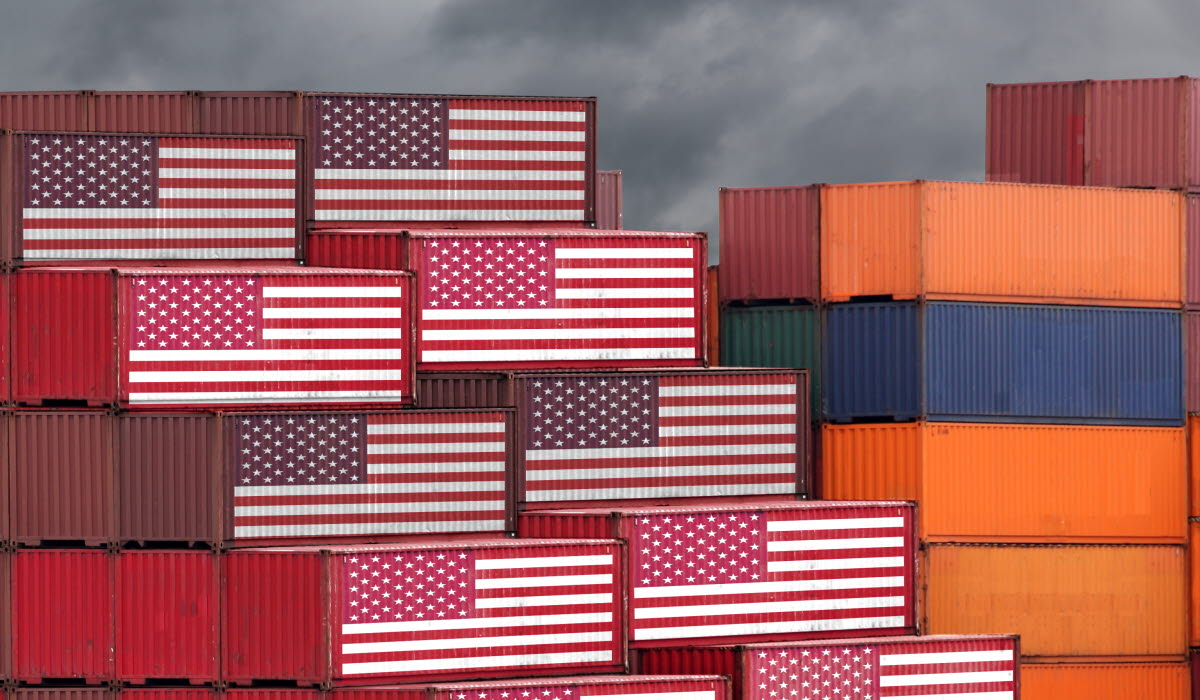
Swedish companies exporting to or operating in the United States are facing rapid changes in the trade climate. Executive-led tariff actions, newly concluded Section 232 investigations and a pending Supreme Court ruling on the use of the International Emergency Economic Powers Act (IEEPA) are creating ongoing legal and commercial uncertainty.
At the same time, diplomatic developments, most notably the recent Greenland tariff reversal, show how closely trade policy is tied to geopolitical negotiations and how quickly tariff threats can emerge and be withdrawn.
During Business Sweden’s webinar, Pillsbury Winthrop Shaw Pittman LLP shared expert insights into the latest US trade actions and legal developments. Below, we summarise the key developments in 2026 and their implications for Swedish companies.
Recent tariff updates
| Tariff/legal authorities/trade deal | Current status | Key products/regions | Impact on Swedish companies |
| Greenland-linked tariffs | Threat announced, then suspended | US imports from Sweden, Denmark, Germany, France, the UK, Norway, Finland, and the Netherlands | No immediate impact, but tensions may rise again depending on NATO-related negotiations |
| IEEPA tariffs (reciprocal & fentanyl-related tariffs) | Currently active, with Supreme Court review pending | US imports from all countries, with some product-specific exemptions | A ruling could temporarily lower tariffs and allow repayments, though alternative measures may be used |
| US-EU trade deal | EU ratification paused following Greenland-related threats | US imports from the EU | Failure to ratify could increase trade instability and remove existing limitations on 232 tariffs |
| Section 232 –Semiconductors | Investigation finalised | Advanced semiconductors and derivative products | Tariffs target a narrow group of high-end chips, mainly affecting companies such as Nvidia |
| Section 232 – Critical minerals | Investigation finalised | Critical minerals and derivative products | No tariffs imposed; duty-free treatment continues |
Executive tariff powers and legal uncertainty
A pending Supreme Court decision on the legality of IEEPA tariffs could significantly reshape the trade landscape. If the Court invalidates IEEPA-based tariffs, they would no longer be enforceable, potentially opening the door to duty refund claims. If upheld, trade volatility is likely to persist.
However, even if IEEPA tariffs are struck down, the administration is expected to rely on alternative legal tools, such as Section 122 of the Trade Act, which allows for temporary broad tariffs in a similar manner. A favourable ruling, therefore, does not guarantee a tariff-free window for Swedish exporters.
Section 232 investigations
Two recent Section 232 investigations were concluded with limited direct impact on Swedish companies.
Semiconductors – narrow but strategic 14 January 2026 White House Proclamation
Tariffs were introduced on advanced computing semiconductors, primarily targeting high-end chips from companies such as Nvidia and AMD. The aim is to reduce foreign dependence on strategic computing capacity rather than broadly tax electronics.
Multiple exemptions apply, including for US data centres, repairs and replacements, R&D activities, and use by US start-ups. As a result, direct exposure for Swedish exporters is expected to be limited. However, companies reliant on advanced chips may face tighter controls, higher input costs, and potential supply constraints.
Critical minerals – duty-free for now 14 January 2026 White House Proclamation
While the investigation confirmed the strategic importance of critical minerals, no tariffs were imposed. Instead, the administration has called for negotiations with trading partners that could introduce price floors or other trade-restrictive measures in the future.
For now, critical minerals continue to enter the US duty-free, supporting Swedish companies involved in battery technology, EV supply chains, and advanced materials.
Greenland and the US–EU trade deal
In July 2025, the US and the EU announced a new trade cooperation agreement. Its implementation was paused on 21 January 2026 following tariff threats linked to President Trump’s bid to acquire Greenland. After the threats were reversed, the EU is still expected to ratify the deal, which would help stabilise the trade climate.
This episode demonstrates the strong link between trade policy and geopolitics. Swedish companies should proactively monitor ongoing negotiations, as new tariffs may arise if talks break down.
What to watch
- Supreme Court ruling on IEEPA authority
- Ratification of the US–EU trade deal
- Ongoing Greenland negotiations between the US, EU, NATO, Denmark, and Greenland
Get SME tariff support
Through the US-Sweden Tariff Intelligence & Advisory Platform, Business Sweden will host a webinar with KBKG in March on how to leverage a Transfer Pricing Agreement when importing into the US.
Swedish SMEs and larger companies can join the platform to access ongoing updates and webinars on US tariff changes, helping them stay informed and prepared. Register now to join the US–Sweden Tariff Intelligence & Advisory Platform and stay ahead of tariff developments.
Get in touch
Business Sweden has extensive experience in tariff scenario analysis, localisation strategies, and supplier evaluations. If you would like support in assessing your supply chain, navigating the impact of tariffs on your US operations or joining the platform, please contact Johan Karlberg or Vlad Månsson
SUBSCRIBE TO OUR US TRADE POLICY BLOG
Stay ahead with the latest insights and updates from Business Sweden’s US blog series.
Click here to subscribe now to receive email notifications for new posts.